



 647-812-5125



2026 Shopify Marketing: What’s Real, What’s Noise
Shopify marketing in 2026 feels like a moving target. If you’re running a store or leading growth for one, you’ve probably asked yourself this at least once this year:
“Are we doing what still works… or just what we’ve always done?”
A winning Shopify marketing strategy in 2026 pulls a few things in the same direction: AI-powered personalization, segmented email flows, smarter ad spend, and content built for both Google and AI search. The stores pulling ahead aren’t chasing more channels. They’re tightening the ones that already drive revenue.
This post is for you if you’re:
-
- A founder or marketing lead trying to cut through the AI noise
- Unsure whether your current setup is still competitive
- Looking for clarity, not complexity, in how to grow next
Here’s what you’ll walk away with:
✅ A breakdown of what marketing strategies are fading (and why)
✅ What’s actually working in 2026—based on current patterns, not just theory
✅ A tight list of tools and tactics worth your time
✅ A framework to sharpen your Shopify marketing strategy for the year ahead
Bonus: You’ll also get access to our quick-read Shopify Marketing Readiness
Checklist that surfaces gaps, opportunities, and easy wins.
What’s Changed in Shopify Marketing in 2026?
Shopify marketing hasn’t just evolved—it’s been flipped on its head.
Not because of a single trend, but because the entire ecosystem is shifting. What used to work on autopilot—ads, A/B tests, basic flows—isn’t delivering the same results in 2026. And the brands seeing the biggest wins? They’ve already adapted.
Here’s what’s driving the change:
1. From Ads to Experience
It used to be simple: run Facebook ads, track ROAS, scale.
Now? That playbook’s too expensive—and too noisy. Instead of pouring more into Meta or TikTok, top brands are investing in:
- Smart quizzes and guided shopping
- Hyper-personalized PDPs
- Post-purchase journeys that feel intentional
The shift: From pushing products to building systems that convert by design.
2. AI Is Now Part of the Stack
AI isn’t optional—it’s foundational. If you’re still doing everything manually, you’re already behind.
- Shopify Magic writes product descriptions in seconds
- Sidekick acts like a built-in strategist
- Klaviyo AI tests, segments, and optimizes campaigns
- Rebuy and ConvertFlow suggest bundles based on customer behaviour
The difference in 2026? These tools aren’t generic. They learn your brand voice, your buying patterns, and your customers.
3. The Cookie Is Crumbling
iOS updates, browser privacy changes, and disappearing third-party data have made retargeting much less reliable. It isn’t dead, but you can’t lean on it like before.
Smart brands now collect zero-party data straight from shoppers:
- Quizzes that ask what they’re shopping for
- Preference forms at sign-up
- On-site behaviour tracked through their journey
This data is yours, it’s accurate, and no privacy update can take it away.
There’s a compliance side too. If you run Google Ads or GA4 and have any EU or UK traffic, Google Consent Mode v2 is now required. Without it, your remarketing lists stop filling up and your conversion data gets shaky, because Google can’t track shoppers who decline cookies. This isn’t a future problem. It’s quietly shrinking what you can measure and target today.
4. Google’s Not the Same Google
Google’s AI Overviews changed how people search.
Now, users get AI summaries right in the results. That means if your content isn’t helpful—or well-structured—it may never get clicked.
To stay visible, brands are:
- Using schema, clear headings, and FAQ formats
- Linking product pages to relevant blogs and quizzes
- Writing for answers, not just rankings
SEO isn’t dead. It’s just more competitive—and more strategic.
These shifts also open up new angles for GEO ecommerce, where brands tailor search visibility and on-site content based on user geography and context.
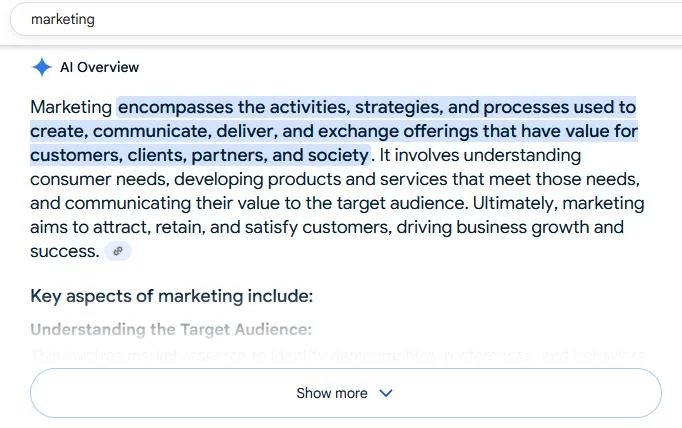
Google AI Overviews Example
5. Ads Are Pricier. ROAS Is Lower.
CPCs are up. CTRs are down. That “scale with ads” playbook? It’s hit-or-miss at best.
Winning brands are layering:
- Warm traffic over cold traffic
- Retargeting using quiz data and email segments
- Click paths that match the ad’s message perfectly
It’s not about spending more. It’s about spending smarter.
This is where AIO and GEO shine—and we’ll break those down next.
The best Shopify stores aren’t bolting marketing on after the fact. They’re building it into the entire customer flow:
Quiz → custom product path
PDP → UGC + AI-driven bundles
Checkout → urgency + cross-sells
Post-purchase → retention + referrals
In this climate, figuring out the best way to advertise Shopify store visibility means less spray-and-pray, more alignment between message and moment.
Which Shopify Marketing Strategies No Longer Work?
Marketing on Shopify didn’t just shift—it shook loose a lot of old assumptions.
Tactics that once felt like smart moves are now slowing brands down. And it’s not because they’re inherently bad… they just don’t match how customers shop anymore.
Here’s where we’re seeing the biggest breakdowns.
1. Cold Traffic Funnels Are Fizzling Out
It used to be simple: Run a broad-interest Facebook ad, drive the click, and scoop up conversions.
Now? That ad is costing you 3x more. And it’s being served to someone who barely remembers what they clicked.
What’s changed:
People are cautious with where they spend. They don’t just want attention-grabbing—they want relevance, fast. And platforms are no longer handing out cheap, qualified traffic.
Why it matters:
If your funnel starts cold and ends colder (i.e. homepage, no follow-up), you’re not just losing money—you’re losing momentum.
2. Tiny A/B Tests Aren’t Moving the Needle
Yes, it’s great that you tested two headlines.
No, that’s not a strategy.
In 2026, shopper behavior changes by the week. Testing one small thing at a time won’t help you keep up.
What’s changed:
AI tools now show you patterns—what people actually do on your site over time. You’re no longer limited to “headline A or B.” You can now see, in real time, what flows convert and where people drop off.
Why it matters:
Brands stuck in slow testing loops are improving the paint colour while the foundation cracks underneath. Instead, AIO marketing focuses on system-wide patterns that evolve with user behaviour.
3. One-Size-Fits-All Email Doesn’t Fit Anymore
You’ve probably received that same “20% OFF – Today Only!” email a dozen times.
And ignored it every time.
Right?
What’s changed:
Shopper expectations are higher. They want content that feels like it was made for them, not for your whole list.
Batch-and-blast emails? They’re either deleted or flagged.
Why it matters:
Your highest-value touchpoints (welcome flows, cart reminders, post-purchase check-ins) only work if they’re timely, relevant, and built around behaviour.
Here’s the truth:
A tactic that used to work might still be familiar. But that doesn’t make it effective.
If something that once drove growth now feels like it’s dragging, trust your gut. It probably needs a rethink.
What Shopify Marketing Strategies Still Work in 2026?
Four strategies still drive results in 2026 when done right: smart email flows, content that answers real buyer questions, product pages that fit the shopper, and free traffic sources like SEO and content instead of relying only on paid ads.
None of these are new. What changed is that each one now only works when it’s tied to real customer intent, not run on autopilot.
It’s tempting to think you need to throw out everything and start fresh.
You don’t.
1. Email Marketing
What’s not working:
Sending one big promo to everyone on your list every week.
Same message, no context, no segmentation. It’s easy… and it gets ignored.
What still works:
Automated flows that know what your customer did last.
A welcome series that matches their quiz results. A winback that references what they almost bought.
It feels more like a conversation, and it performs like one, too.
If you’re building a Shopify marketing strategy, start by fixing your flows before chasing campaigns.
2. Content for Conversion
What’s not working:
Blogs stuffed with keywords and no purpose.
They’re written for Google, but even Google’s not interested anymore.
What still works:
Helpful, easy-to-skim content clusters:
Blog → Product Collection → Quiz → PDP
Answer the real questions your customers ask—then link them to what actually solves the problem.
This is where Shopify SEO best practices still matter. Structured content gets surfaced in search, and it gets clicked.
Done right, content connects questions to conversion paths, earning trust before a single ad dollar is spent.
3. Product Pages
What’s not working:
Leaving the same static layout for every shopper, no matter how they got there.
What still works:
Let customers see what they care about most.
Show social proof, relevant bundles, or product videos pulled from similar buyer profiles.
If they clicked from an email or quiz, match that context.
These tweaks fall under Shopify conversion optimization, but they also boost time on page and lower bounce.
4. Advertising for Everything
What’s not working: leaning on ads alone to drive all your growth. One policy change or cost spike, and you’re scrambling.
What still works: building traffic sources that don’t depend on ad spend:
- Evergreen blog posts
- Lead-gen quizzes
- Email and SMS opt-ins
- Personalized landing pages tied to search intent
Smart brands still run ads, but they also own their audience, so they’re never one algorithm change away from a crisis.
Social commerce fits here too. TikTok Shop now plugs directly into Shopify, and Instagram and YouTube Shopping have grown up alongside it. If your products are visual and your audience skews under 40, selling natively on these platforms deserves real attention in 2026.
Growing a Shopify store in 2026 isn’t about spending more. It’s about creating a layered experience that earns both the click and the trust.
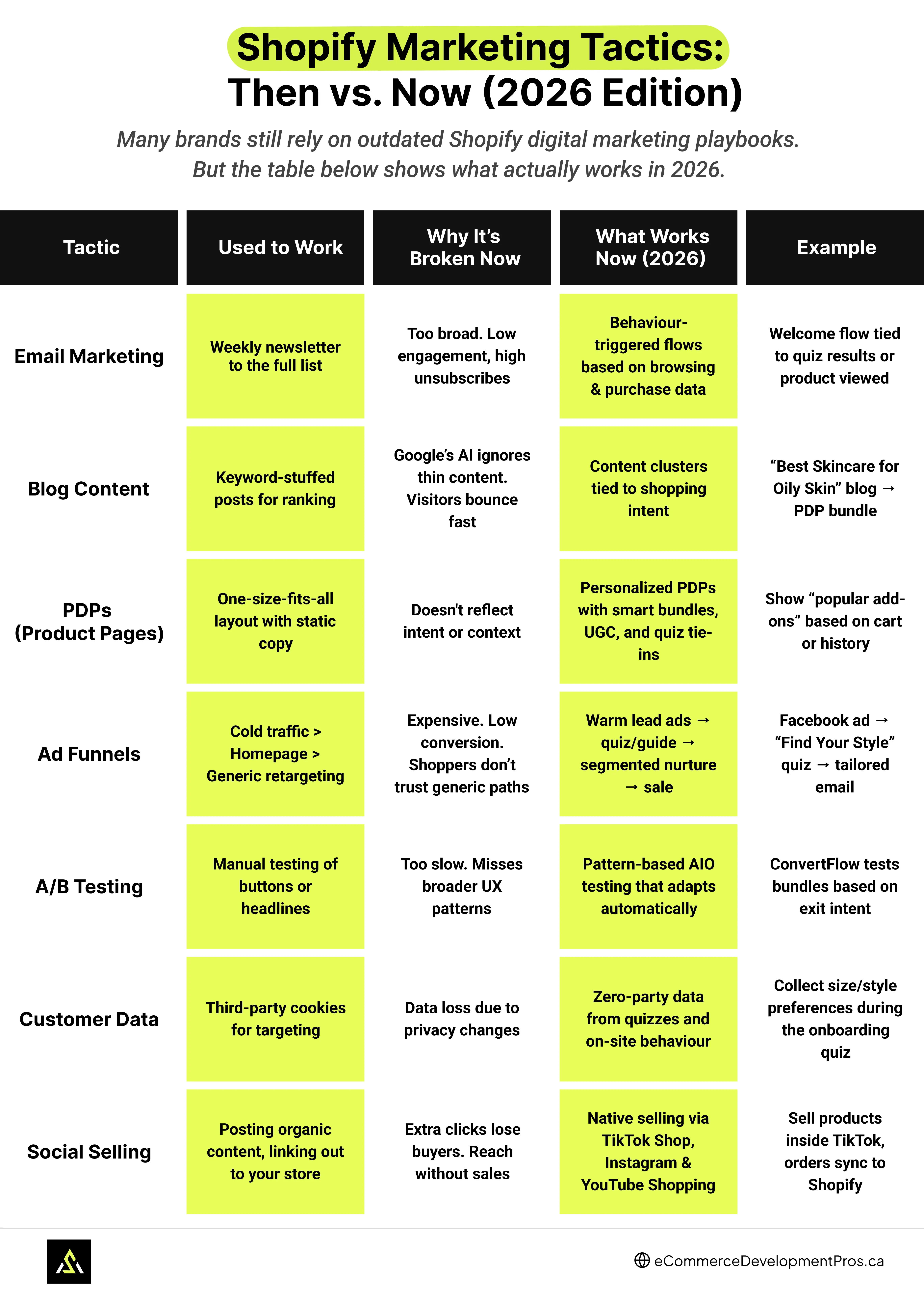
Best Tools for Shopify Marketing in 2026
Most tools promise results.
But the best ones in 2026 are quiet workhorses—tightly connected, conversion-focused, and tailored to how people actually shop now.
These aren’t just random picks—they’re tools our Shopify marketing agency has used across dozens of client stores to drive real results.
Here’s a breakdown of tools we’re seeing make a real impact, especially for stores that are serious about building smarter Shopify marketing strategies:
1. For Personalization & Smart Optimization
Together, these tools form the foundation of a smart AIO marketing stack, one that adapts in real time to how people shop, click, and convert.
- Rebuy
Makes cross-sells feel natural. You’ll see it powering “Complete the look” or “Frequently bought together” sections that adjust automatically based on what someone clicks or adds to cart. - ConvertFlow
Good for creating popups and custom blocks on landing pages. It reacts to user behaviour like scroll depth or exit intent, and helps guide the shopper without being annoying. - Builder.io
If you’ve ever wanted to test changes to your product page layout without relying on a developer every time, this is your shortcut. Drag, drop, preview. - LimeSpot
Creates bundles on the fly based on browsing and buying history. It’s subtle, but it works behind the scenes to push average order value up.
If you’re on Shopify Plus, Shopify Audiences is worth testing, and it’s free. It builds ad audiences from first-party purchase data across the whole Shopify network, then syncs them to Meta, Google, TikTok and more, no third-party cookies needed.
Merchants report meaningfully lower acquisition costs and stronger retargeting than platform-built lookalikes. It’s only available in the US and Canada, so it’s a real edge for Canadian stores.
These tools support AIO marketing by blending personalization into the browsing journey, not just the checkout.
2. For Collecting Real Customer Data
This level of insight powers GEO ecommerce efforts, allowing stores to serve different experiences based on location, behaviour, and stated preferences.
- Octane AI
Let customers tell you what they’re looking for—with product quizzes that feel like a guided experience. You get insights, they get better matches. - Fairing
You’ve probably wondered where customers came from. This tool lets them tell you right after purchase, filling gaps that analytics tools miss. - KnoCommerce
Adds extra questions to your checkout or thank-you page:What made them buy? What almost stopped them?That kind of insight can shape campaigns better than any heatmap.
If you’re leaning into GEO ecommerce or niche targeting, this kind of zero-party data is priceless—and permanent. No third-party cookie needed. See our full list of Shopify quiz and survey apps for data capture.
3. For Email & SMS That Doesn’t Feel Robotic
- Klaviyo
Still, the backbone of email for many Shopify stores. What’s changed is how it’s used—more triggered flows, less one-size-fits-all blasts. - Postscript
Text-first and Shopify-native. It’s great for quick, personal updates like, “Hey, your size is back in stock,” or “This offer ends tonight.” - Attentive
Similar to Postscript, but often chosen by brands scaling into higher-volume SMS marketing with detailed segments.
Used right, these platforms keep your messaging personal, not pushy. They work best when paired with zero-party data and smart automation.
4. For Building Trust with Proof & Storytelling
- Okendo
Goes beyond basic reviews. It lets shoppers filter by things like size, fit, or even reviewer traits—so the content feels relevant to them. - Tolstoy
Instead of writing a story, you can show one. These short, tappable video blocks can live on your product page and walk the shopper through what makes your product worth it.
These small additions give your marketing real depth, because people trust other people more than ad copy. The right Shopify reviews and social proof apps make that trust easy to showcase.
You don’t need to use every tool listed here:
Pick one or two from each category. You don’t need to go all in on day one. Start with the weakest link in your funnel and fix that first. Then build.
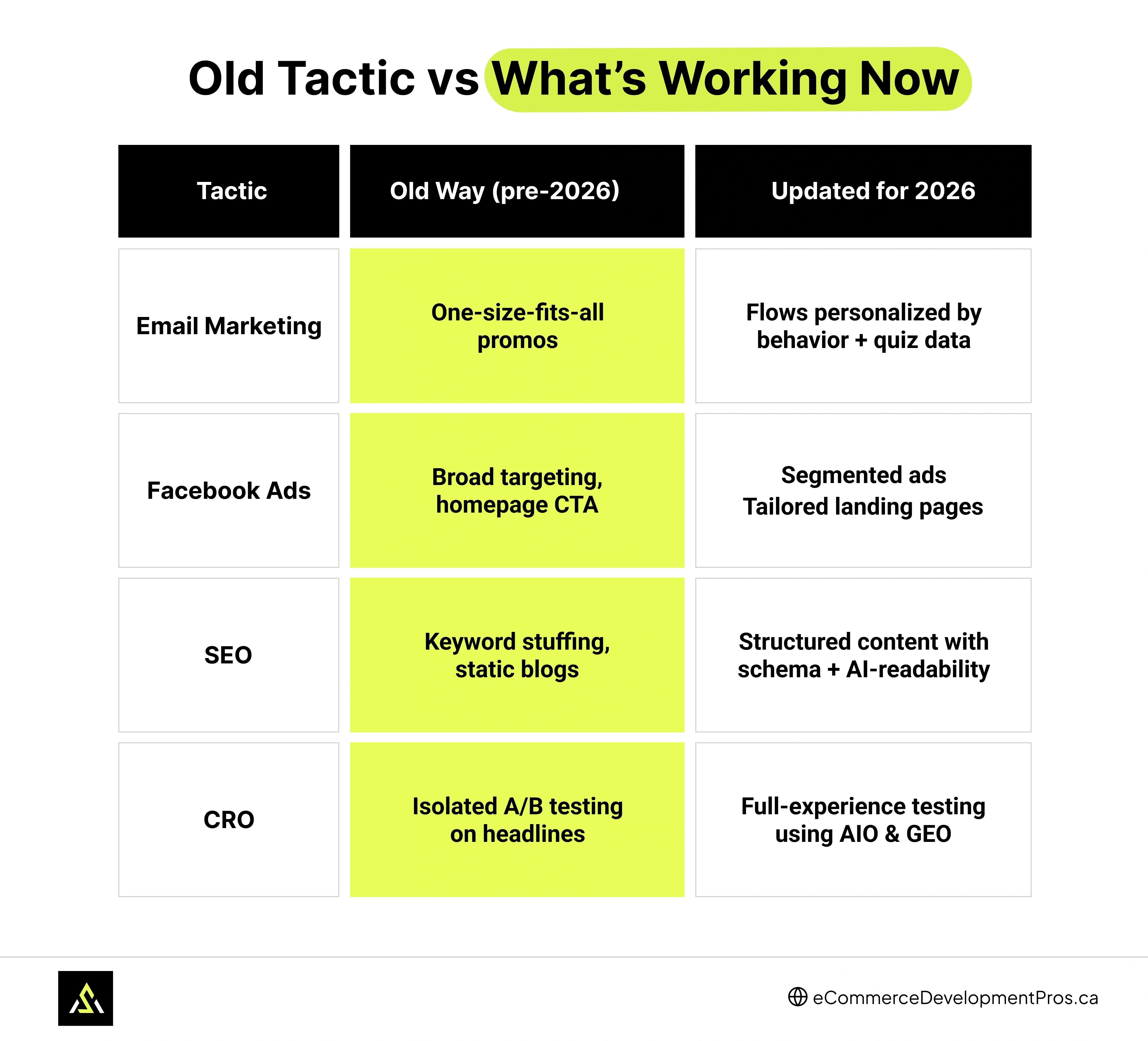
How to Future-Proof Your Shopify Marketing Strategy
Marketing keeps changing. Tools change. Buyer behaviour changes. Even platforms you rely on today might not look the same tomorrow.
So, how do you stay ahead, without burning out chasing trends?
You future-proof your foundation.
Here’s what that looks like in the real world of Shopify in 2026:
1. Make Data Work for You, Not the Other Way Around
Most brands collect data. Few use it well.
Start by listening to your customers—literally.
Ask questions, run a quiz, and check post-purchase answers. Let them show you what matters.
Then feed that back into your marketing:
- Trigger emails based on size, budget, or interests
- Segment SMS by what people actually browsed
- Use the info to personalize bundles or offers
Why this matters: The more you understand intent, the less you waste on generic campaigns that fall flat.
2. Don’t Lock Yourself into a Rigid Store
Pretty doesn’t always convert.
Make sure your site is easy to tweak, especially the pieces that impact revenue:
- Your product pages
- Your bundles
- Your landing pages
Tools like Builder.io or Rebuy help you make changes fast, without waiting on a dev. That’s key when you want to test new ideas—or pivot.
Why this matters: A flexible store lets you adapt fast when what worked last month stops working today.
3. Tie the Journey Together
Think less about channels. Think more about flow.
Someone sees your ad. Then what? Where do they go? What do they get?
- Start with a quiz to build interest
- Guide them to a tailored page, not your homepage
- Follow up with an email based on their response
Too many brands treat each step as separate.
The smart ones?
They make the journey feel like one conversation.
Smart journeys don’t just help with CRO—they’re also key to Shopify SEO best practices, by connecting intent-based content with high-converting pages.
This isn’t just good UX—it’s also a core principle of AIO marketing, where real-time feedback loops improve both flow and performance.
4. Keep an Eye on What’s Coming—Without Getting Distracted
Not everything shiny is worth your time. But you should still stay aware.
Watch what’s happening with:
- Google’s AI Overviews (AIO)
- Personalization tools that go beyond static rules
- GEO (generative experiences) that shift layouts on the fly
- GEO ecommerce tactics that customize shopping flows by region, language, or local promotions
You don’t need to jump on every new tool. But the sooner you understand them, the easier it is to adapt when the shift becomes the norm.
Bottom Line
You don’t need to throw out everything that’s worked.
But you do need to set yourself up to evolve without starting from scratch. That’s what future-proofing your Shopify marketing strategy really means in 2026.
Where You Focus Next Matters Most
There’s a lot of noise out there right now.
New tools. New rules. A lot of bold claims about what’s “dead” and what’s “next.”
What works best in Shopify marketing hasn’t disappeared—it’s just shifted.
Success today isn’t about chasing every update or piling on more tactics. It’s about tightening the parts that already matter and aligning them with how people actually shop now.
If your store isn’t growing the way it used to…
Or if your current approach isn’t keeping up with how buyers shop in 2026, we’re here to help.
Not sure what to focus on first? We can help simplify the next move.
FAQ About Shopify Marketing Strategy
What is a Shopify marketing strategy?
A Shopify marketing strategy is your plan for turning visitors into repeat customers using the channels that actually move revenue, like email, ads, content, SEO, and personalization. It sets where your budget and effort go, guided by how your customers really shop. The best strategies tie every touchpoint into one connected journey instead of treating each channel as its own island.
How much should I spend on Shopify marketing?
It depends on your margins, growth stage, and how heavily you lean on paid ads. A store still building its audience usually invests more upfront to get traffic moving. What matters more than a fixed percentage is watching what each channel returns and moving money toward whatever earns its keep.
What’s the best marketing channel for a Shopify store?
Email tends to win on return because the audience belongs to you, not a platform that can change its rules overnight. That said, it performs best when content, SEO, and paid ads keep feeding fresh people into it. Your ideal mix comes down to your product and margins, so aim for a few channels that support each other and you’ll never be at the mercy of one.
How do I market my Shopify store on a small budget?
Lean on the assets you own rather than the ones you pay for by the click. Automated email and SMS flows, content that answers what buyers are already asking, and quizzes that capture zero-party data all cost more time than money. Their advantage is that they keep working long after they’re set up, while paid traffic vanishes the moment the budget dries up.
How often should I update my Shopify marketing strategy?
A quarterly review works for most stores, with a quick look at your key numbers each month. Ad costs, buyer habits, and platform rules move too quickly for a once-a-year check to keep pace. Catching a slipping channel in month three beats discovering it in month eleven.
Ready for a Gut Check on Your Strategy?
We offer a free, no-strings-attached Shopify Marketing Review. We’ll take a close look at what you’re doing today, where things might be slipping through the cracks, and how to sharpen your Shopify marketing strategy for where your store is right now.
Book your free strategy session with a Shopify marketing agency that understands where the platform is headed and how your store can grow with it.
👉 Book your free strategy session here
No pressure. Just real advice, shaped by what’s working across other growing stores.
You don’t need more tools—you need a plan that makes the most of what you already have.
If AI shifts, privacy changes, and rising ad costs have you rethinking your approach, we can help you get clarity and a plan that works.