


 647-812-5125



Most Shopify Stores Don’t Have a Traffic Problem. They Have a Conversion Problem
You don’t need more ads; you need more people buying once they’re on your site. That’s what conversion optimization is all about. As Shopify conversion rate optimization experts, we look at how visitors move through your store, find where they drop off, and make practical, data-backed changes that turn those missed Read more opportunities into sales. At Ecommerce Development Pros, we act as your dedicated CRO agency, using AI insights, Shopify-native tools, apps, and 17+ years of eCommerce experience to identify sales leaks, test improvements, and scale what works—without disrupting your live store. Read Less
Average increase in overall conversions after structured CRO implementation.
Return on ad spend (ROAS) once landing pages are optimized for conversions.
Quicker testing and rollout using AI insights and Shopify automation.
Reduction by optimizing checkout and recovery flows.
How We Turn Window Shoppers into Paying Customers
Every Shopify store gets visitors. But turning those visitors into buyers? That’s where most stores struggle. We’ve helped hundreds of brands turn underperforming stores into sales machines—not by guessing, but by combining data, design, and real user insight. That’s the difference between basic tweaks and working with an experienced Shopify CRO agency that understands Shopify inside out.


Data-Driven Decisions
Poor conversion? The answer is in your data. The average Shopify store converts at 1.4%–2%—top performers hit 3%–5%. The gap between those numbers is revenue you’re already generating traffic for but not capturing— see what closing that gap is worth. We find where your visitors drop off and fix the friction holding your store back.
Read More

Experience-Led Design
Many store owners assume their design is the reason behind poor conversions. But in our experience, more than half of the clients who come to us for a full redesign don’t actually need one—they just need smart design updates that help shoppers move smoothly through the store. Small, focused changes can have a big impact. Rearranging sections on the homepage, improving product-page flow, or cleaning up the mobile layout can lift conversions. Every element should guide the visitor toward buying, and our design refinements turn casual visitors into confident customers.
Read More

Streamline Your Apps
Too many Shopify stores rely on a mountain of apps, and every extra one slows your site. We build and optimize an app stack for your Shopify store that truly adds value—personalized recommendations, loyalty programs, and UGC that help convert browsers into buyers. Fewer apps, faster site, better conversions.
Read More

Slow Speed Is Costing You
Every second matters. A 1-second delay costs up to 7% of your conversions— see what that means for your store. We optimize speed, cut app bloat, and clean up theme code so your store loads fast and converts better.
Read More

Copy That Converts
Most people underestimate how much copy affects conversions. Design catches attention, but it’s the words that make people act. When we do a CRO audit, we look closely at your copy—product descriptions, headlines, and CTAs—to see if they’re helping or hurting the sale. We’ll tell you exactly what needs to change and why it’s costing you sales. If your copy requires more than a few adjustments, our writers can step in to refine it: clear, honest, and written to encourage people to take action.
Read More

Continuous Optimization
CRO isn’t a one-time fix—it’s a rhythm. Our conversion rate optimization experts conduct quarterly conversion audits, track trends, and adjust your store as customer behavior and seasons shift. As part of Shopify conversion optimization maintenance, you’ll get clear insights, action plans, and ongoing guidance to keep your store ahead of changing expectations. The best-performing Shopify stores never stop improving.
Read MoreAI-Powered Shopify CRO Across Every Customer Touchpoint
Reviews & UGC
Turn happy customers into your best sales team. Use apps like Loox or Okendo to collect and display authentic reviews that build instant trust.

AI Product Recommendations
Show the right product at the right time. Using Rebuy or LimeSpot, we personalize product suggestions to boost order value and repeat sales.

Interactive Quizzes
Turn product discovery into a guided experience. We use interactive quizzes to help shoppers find the right product fit and drive higher add-to-cart rates.

Email & SMS Marketing
Stay connected beyond the store. We use Klaviyo, Omnisend, and Postscript to send personalized messages that recover carts and drive repeat sales.

Shoppable Videos
Use shoppable videos for enhanced product storytelling and let visitors watch, click, and buy right inside the video.

Loyalty & Referrals
Reward loyalty, grow referrals. With Smile.io, LoyaltyLion, and ReferralCandy, we turn happy customers into repeat buyers and brand promoters.

Surveys & Feedback
Ask. Listen. Improve. With tools like Fairing or Zigpoll, you can reveal friction points, guide smarter tests, and help lift conversion rates fast.

AI Chatbot / Concierge
Convert questions into sales. We use AI chat tools - Tidio, Gorgias Automate, and Shopify Inbox to answer instantly, guide shoppers, and recover lost carts — even after hours.

Heatmaps & Behavior Tools
See what your shoppers see. Using Hotjar, Lucky Orange, and Microsoft Clarity, we track real user behavior to fix friction before it costs you conversions.

Let’s Turn More Clicks Into Customers
See what’s holding your Shopify store back — and how small, data-driven changes can deliver big results. Get your Shopify CRO audit and start converting more of the traffic you already have.


Turning Browsers Into Buyers
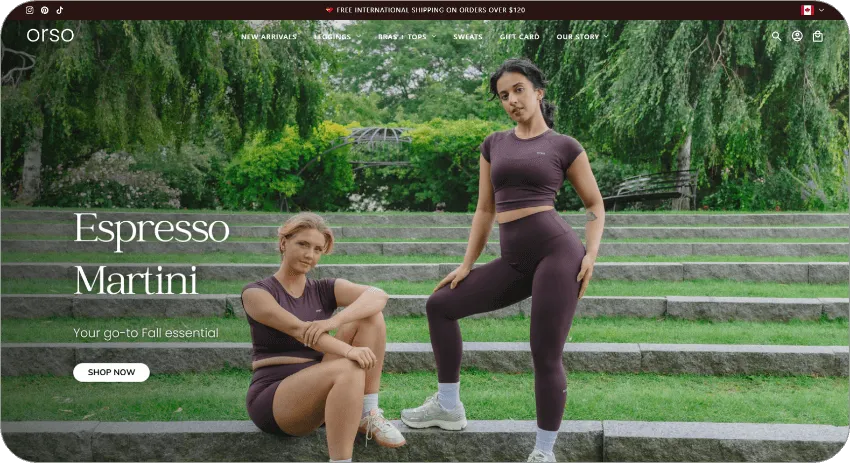
For a fashion and apparel brand, we focused on design and copy adjustments on key product pages helped lift sales by 32% within two months — no new ads, just better on-page flow.


More Revenue, Same Traffic
A women's fashion retailer from Toronto struggled with drop-offs at checkout. We used heatmaps and behavior tools to clean up the checkout process, increasing revenue by 21% from the same traffic.


Luxury Bedding Manufacturing
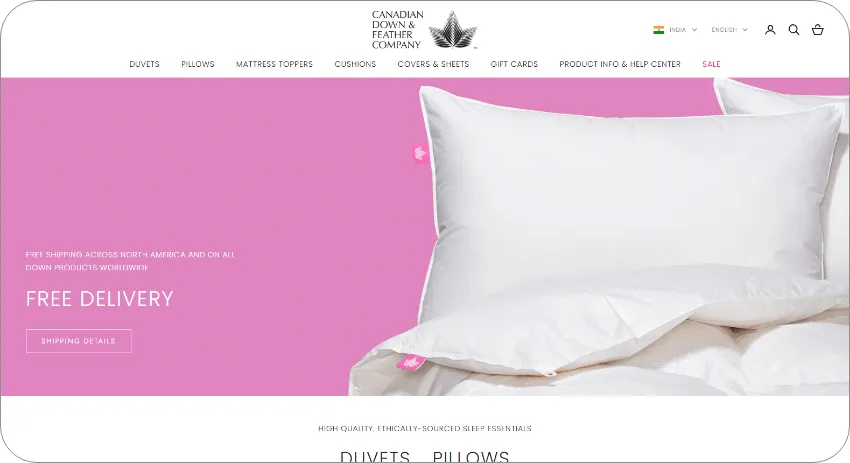
For a bedding products manufacturer, we introduced social proof and simplified product comparison layout — cart abandonment dropped by 18%, and more shoppers completed checkout.
Trusted by Modern Marketing & Growth Teams

Strong Shopify Expertise
“Great team. Strong Shopify expertise. They improved our design and made the whole shopping experience better. It shows in our results.”

Conversion Optimization That Increased Our Sales
“Our conversion rate has improved steadily, and the best part is we're generating more revenue from the same marketing spend. I actually found them through their CRO calculator, and it helped me truly realize how much revenue we were leaving on the table. We've now retained them for ongoing conversion optimization and other services they offer.”

Subscription Store Design & Launch
“They didn't just build a store — they helped us think through how to present the brand and products properly. The design feels clean and engaging, not like a typical template store. What stood out was how they used customer reviews and stories across the site. It's been around 3 months since launch and we're seeing solid progress. Conversion rate has improved to around 2.7%, subscription sign-ups are coming in steady (close to 20% on some products), and we're already seeing repeat orders.”
Professional Shopify Development with Real Results
“We worked with eCommerce Development Pros to redesign our Shopify store, and the impact has been real. They took time to understand our brand and customers, and restructured the site so everything flows better. Since launch, we've seen improved conversions and stronger engagement.”
Brands Who Build, Grow, and Win With Us
Shopify Conversion Rate Optimization
Most clients have the same questions when we start talking about CRO — how it works, what to expect, how you’ll leverage AI, and how fast it shows results. Here’s a quick look at what we get asked most often, based on real projects we’ve done for Shopify and Shopify Plus stores.
What is AI-powered Shopify Conversion Rate Optimization?
+AI-powered Shopify conversion rate optimization (CRO) means using customer behavior data and AI-assisted tools to identify friction in your store and improve conversions without relying on guesswork.
The Shopify CRO process always starts the same way.
Our conversion rate optimization experts look at how real people use your site. Tools like Hotjar or Microsoft Clarity show us where shoppers scroll, stop, hesitate, or leave. That tells us what’s getting in their way.
Once we know that, we decide if AI can help.
Sometimes it can, sometimes it’s not needed. For example, we’ve used Rebuy to create dynamic product bundles that change automatically based on what someone’s been looking at or adding to their cart. It’s subtle but effective — it makes the store feel more personal, and that usually leads to higher conversions.
We’ve also used Nosto to test personalized recommendations and track how that affects average order value. And for some clients, LimeSpot helped tailor what repeat customers see when they come back.
AI isn’t magic. It’s just another layer of insight that helps us make smarter changes, faster — without guessing.
How can AI tools improve my Shopify conversion rate?
+AI tools improve your Shopify conversion rate by reducing friction, personalizing the buying experience, and removing decision fatigue at every stage of the customer journey. Instead of guessing what might convert better, AI analyzes real shopper behavior and adjusts in real time.
Here’s how AI directly impacts conversions:
-
Smarter Product Recommendations
AI tracks browsing patterns, cart behavior, and past purchases to show products customers are most likely to buy.
-
Predictive Search & AI Product Discovery
AI-powered search understands intent, not just keywords. If a shopper types “black gym hoodie under 100,” AI filters intelligently.
-
Dynamic Personalization
AI can change homepage banners, collections, and offers based on Location, Traffic source, Returning vs new visitor, or Purchase history. Personalized experiences consistently outperform static stores and help improve Shopify conversion rate across segments.
-
AI-Powered CRO Insights
Tools like heatmaps and behavior analysis platforms use machine learning to detect drop-off points, scroll depth patterns, checkout friction, and form abandonment. Instead of assumptions, you optimize based on behavioral data.
-
Smart Email & Retargeting Automation
AI predicts - when a customer is most likely to buy, or which products they’re most likely to reorder, or when churn risk increases. This helps improve cart recovery rate, repeat purchase rate, and customer lifetime value.
-
AI Chat & Buying Assistants
AI chat tools answer product questions instantly, reducing hesitation. They guide shoppers toward decisions instead of forcing them to search manually.
Do I need AI tools to optimize my Shopify store, or can I do CRO manually?
+You don’t need AI to start improving conversions.
Manual CRO focuses on fixing what’s already visible—layout, load speed, product copy, and overall structure. Many stores see strong growth just by tightening these fundamentals.
AI just helps you move faster when you’re ready for deeper testing.
It can spot things you might not catch in Google Analytics — like repeat behavior patterns or subtle drop-off points in checkout.
So, if you’re running a smaller store, manual work is fine.
But if you have a store with a big catalog/ Shopify Plus store, getting thousands of sessions a day, AI becomes more useful — not to replace your strategy, but to help you focus your time where it counts.
Which AI apps or tools work best for Shopify CRO?
+No fixed list of apps works for everyone — it really depends on where your store is struggling: product discovery, decision-making, or checkout friction.
For one client, we used Rebuy to personalize bundles and “frequently bought together” sections, and that alone bumped their average order value.
For another, LimeSpot helped adjust product recommendations based on browsing history — a simple change, big impact.
We also use heatmaps and session tracking tools (Hotjar or Microsoft Clarity) to see where shoppers drop off or hesitate. That’s often where the real leaks are.
If your store has a large catalog, AI search apps like Searchspring or Klevu can make product discovery much easier.
The objective is not to add every app available but to pick a few that would help shoppers discover the right products and complete the transaction faster and easier.
What’s a good Shopify conversion rate in 2026?
+It varies from industry to industry, the type of products you sell, and the price point.
An online store selling skincare products might do great at 3%. On the other hand a brand, selling high-end furniture could be solid at 1.5%.
The traffic source matters too. Paid traffic usually converts lower than repeat visitors or email campaigns.
What we care about most is what’s realistic for your situation.
We start by looking at your numbers — traffic, engagement, and checkout completion — and then set goals based on that.
Even small gains can make a big difference. Moving from 2% to 2.6% might not sound huge, but it can mean thousands in extra sales every month.
If you want to see how your numbers compare by industry, we broke it down in detail in our blog on Shopify eCommerce Conversion Optimization Statistics.
Can CRO really help me get more sales from my existing traffic?
+Yes — that’s actually the whole point of CRO.
Most stores already have enough traffic; they’re just not converting it well.
We’ve helped brands grow sales by 20–40% without spending a dollar more on ads — simply by improving how the store performs.
Sometimes it’s a small thing, like moving a button or making the checkout easier. Other times, we dig into heatmaps and see where people stop or scroll past something important.
The goal’s simple: make the most of the traffic you already have.
When your site converts better, your marketing suddenly starts working harder too.
And if you’re not sure what’s holding you back, we can take a look — our Shopify CRO audit will show you where the leaks are and how to plug them. Request a custom CRO audit for your website.
How long does it take to see results from CRO?
+Most stores start seeing measurable CRO improvements within weeks, not months—though the exact timeline depends on the amount of data we have to work with.
For smaller Shopify stores, we usually start seeing early results within 4–6 weeks — things like higher add-to-cart rates or fewer drop-offs in checkout.
For Shopify Plus stores with larger catalogs and traffic, the process is more structured. We test changes in phases so we can see exactly what’s working before rolling it out site-wide.
The biggest wins often come from the first few quick fixes — speed, layout, copy. After that, the gains are steady and measurable with every round of testing.
CRO isn’t a one-time project; it’s a cycle of improvement. Each test builds on the last until your store is performing at its best.
How do you measure success in a CRO project?
+Success in CRO is measured by clear improvements in how users move through your store—higher conversions, better engagement, and more revenue from the same traffic.
Every store we work with is at a different stage, so we don’t follow any standard checklist.
The first thing we do is figure out where you stand — what your current conversion rate is, how many people add to cart, how many make it through checkout, and what your average order value looks like.
That’s our baseline. Everything we do after that gets measured against it.
Once we have that, we decide what to fix first.
Sometimes it’s the layout or button placement. Other times, it’s product copy, color contrast, or load time.
We use tools like Shopify Analytics, Clarity, and Hotjar to see what visitors actually do on your site — where they scroll, where they stop, what they ignore.
Then we start testing. Change one thing, measure it, and keep what works.
We don’t dump a list of reports on you — we show what improved, where customers are behaving differently, and what it means for your sales.
If you’re on Shopify Plus, we can go deeper with segmentation and personalization, tracking how different audiences respond to changes.
It’s not a one-time job. We keep testing and tweaking until your store is doing the best it can with the traffic you already have.
Can CRO and SEO work together?
+They should — and when done right, they make each other stronger.
We’ve had projects where we started purely with CRO: fixing slow pages, simplifying navigation, tightening product copy. Within a month or two, organic traffic started improving on its own. Google rewards pages that load fast, are easy to navigate, and keep visitors engaged — all the things CRO touches first.
In another case, we began with SEO. Once traffic picked up, the store still wasn’t selling enough. That’s where CRO came in — we ran heatmaps, improved page layouts, rewrote confusing calls-to-action, and fixed checkout friction.
Traffic didn’t change much, but revenue jumped because the site finally converted the visitors it already had.
When our Shopify SEO Services team works with the CRO side, every keyword-optimized page is also built to convert — clean layout, fast load, and clear messaging.
What’s included in your Shopify Conversion Optimization (CRO) audit?
+Our Shopify Conversion Optimization (CRO) audit looks at how customers move through your store and what’s getting in the way of conversions. Every store we audit is different. Some have traffic but no sales, others get sales but struggle to scale.
Here’s how we go about it:
- Start with the numbers. We record your current conversion rate, average order value, and checkout completion. That becomes our reference point.
- Watch how people behave. We use tools like Clarity and Hotjar to see how shoppers move through your pages — where they pause, scroll, or give up.
- Look at the design. Clean design always wins. We note what’s slowing people down and what can be simplified.
- Check performance. We test page speed, image load, and how your apps are affecting site performance. Shopify stores often lose conversions because of small technical drag.
- Review your copy. Clear language with confident messaging sells. We review the headlines, product descriptions, and CTAs closely to see where the message falls flat.
- Test where AI can help. We leverage AI to offer personalization where it makes sense. We test tools like Rebuy or LimeSpot to test product suggestions based on browsing behavior.
After that, we outline what to fix first. We don’t hand over a 20-page report — we build a short, clear plan you can act on.
For Plus clients, we take things deeper — segment data, returning vs. new customers, AI insights on buying patterns — the kind of work that turns small lifts into compounding growth.
Official Technology Partners