



 647-812-5125
 Back to Ecommerce Glossary
What Is Churn Rate?
Churn Rate (CR) is the percentage of customers who stop buying from a business during a specific period. In ecommerce, churn applies to both one-time and repeat purchases, not just subscriptions.
What Are the Different Types of Churn in Ecommerce?
Churn shows where an ecommerce business is leaking value. Different churn types measure different losses.
- Customer churn: Buyers who drop off completely.
- Revenue churn: Customers still buy, but spend less.
- Subscription churn: Ongoing plans are canceled.
- Product churn: A product stops converting past buyers.
- Time-based churn: Customers don’t return when expected.
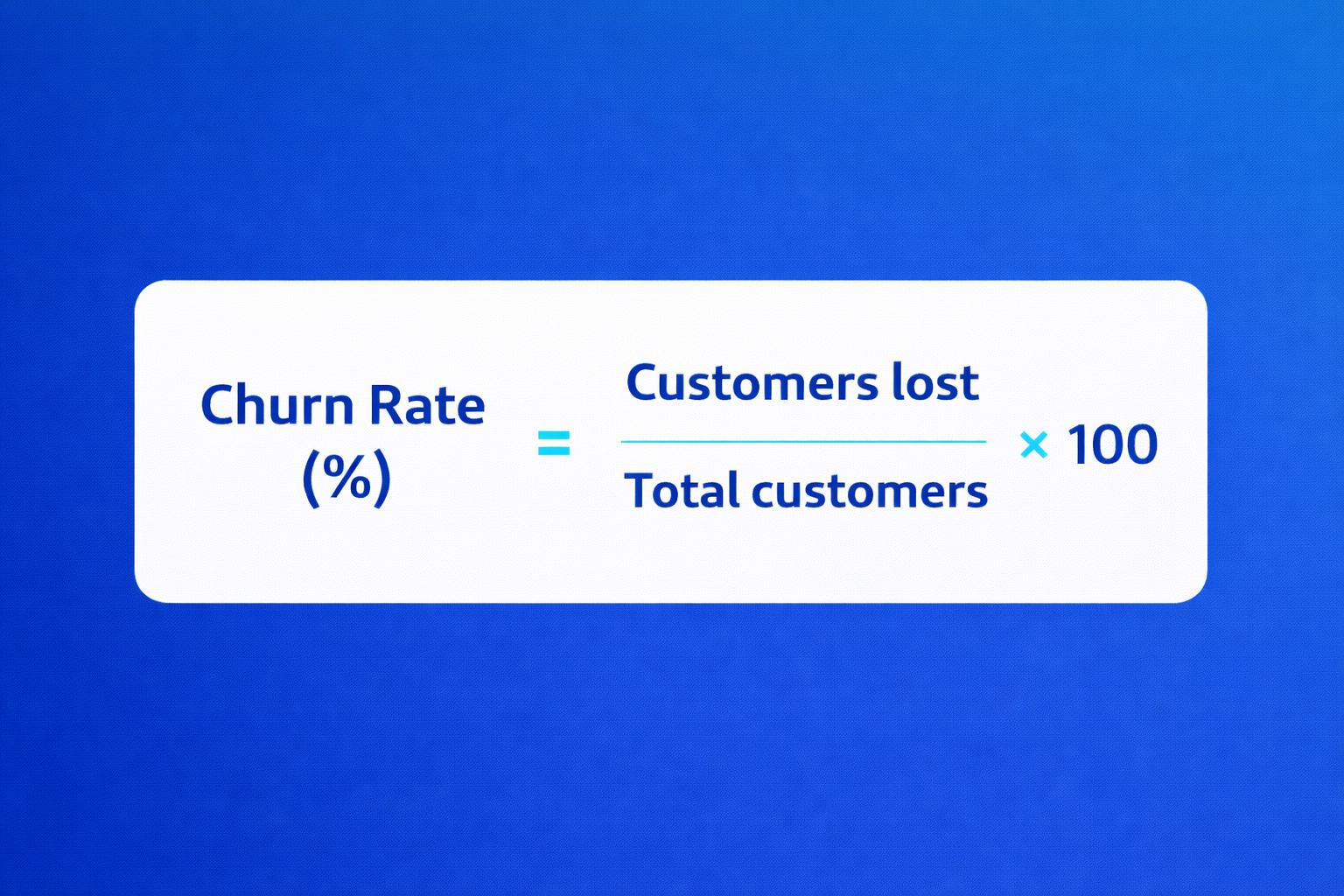
How Is Churn Rate Calculated?
Churn rate measures how many customers are lost during a specific time period. It compares customers lost to the number of customers at the start of that period.
Why Does Churn Rate Matter in Ecommerce?
Churn rate shows how often customers don’t return. When too many leave, keeping the business growing becomes harder and more expensive.
This directly affects:
- Revenue stability: Unpredictable repeat revenue
- Acquisition costs: Higher dependence on paid acquisition
- LTV: Declining customer value over time
- Operational efficiency: Weaker marketing and retention ROI
How Is Churn Rate Different From Retention Rate?
Churn rate measures customer loss whereas retention rate measures customer continuity.
They track the same customer behavior but from opposite sides. If churn is high, retention is low. If retention is strong, churn is low.
Churn Rate and Retention Rate Difference |
||
|---|---|---|
|
Aspect |
Churn Rate |
Retention Rate |
|
What it shows |
Who you’re losing- when and where |
Who you’re keeping & how effectively |
|
What it answers |
Loss of customers over a defined period |
Customers retained over a defined period |
|
Why it matters |
Indicates growth pressure |
Indicates loyalty health |
|
Blind spot |
Doesn’t show strengths |
Doesn’t show losses |
|
Best used when |
Diagnosing problems |
Measuring stability |
What Are the Common Causes of High Churn?
High churn is a signal that customers aren’t getting what they expected after the first purchase. Key contributors for high churn could be:
- Post-checkout friction and delivery issues
- Value-to-price mismatch
- Product quality or expectation gaps
- Limited repeat-purchase incentives
- Unresolved support problems
- Inconsistent cross-channel experience
How to Reduce Churn Rate?
Churn rate tends to decrease when customers consistently have positive reasons to return and buy again, often supported by ongoing Shopify marketing services. Lower churn in ecommerce reflects better experience, value alignment, and customer trust.
- Clear expectations around pricing, delivery, and returns
- Reliable product quality that matches what was promised
- Consistent post-purchase communication and order updates
- Responsive customer support when issues arise
- A smooth and dependable shopping experience across devices
Reducing churn is usually the result of addressing customer experience gaps rather than a single change.
How Churn Rate Is Tracked?
Churn rate is tracked by identifying customers who stop purchasing, using order, subscription, and activity data.
Teams usually track this through:
- Ecommerce analytics showing repeat buying patterns
- Subscription tools that log cancellations and pauses
- CRM and email platforms that track ongoing engagement
When Churn Rate Becomes a Priority Metric?
Churn rate becomes a priority when understanding customer loss is critical to sustaining revenue and growth.
It should be closely watched when:
- Repeat purchases are a major part of revenue
- Customer acquisition costs are rising
- Growth slows despite steady or increasing traffic
- Customer lifetime value is declining
- Subscription or repeat-order models are in place
In these cases, churn rate helps explain whether customers are staying engaged over time.