



 647-812-5125
 Back to Ecommerce Glossary
What Is Revenue per Visitor (RPV)?
Revenue per Visitor (RPV) is a metric that measures how much revenue is generated per visitor, combining the effects of conversion rate and order value.
How Is Revenue per Visitor Calculated?
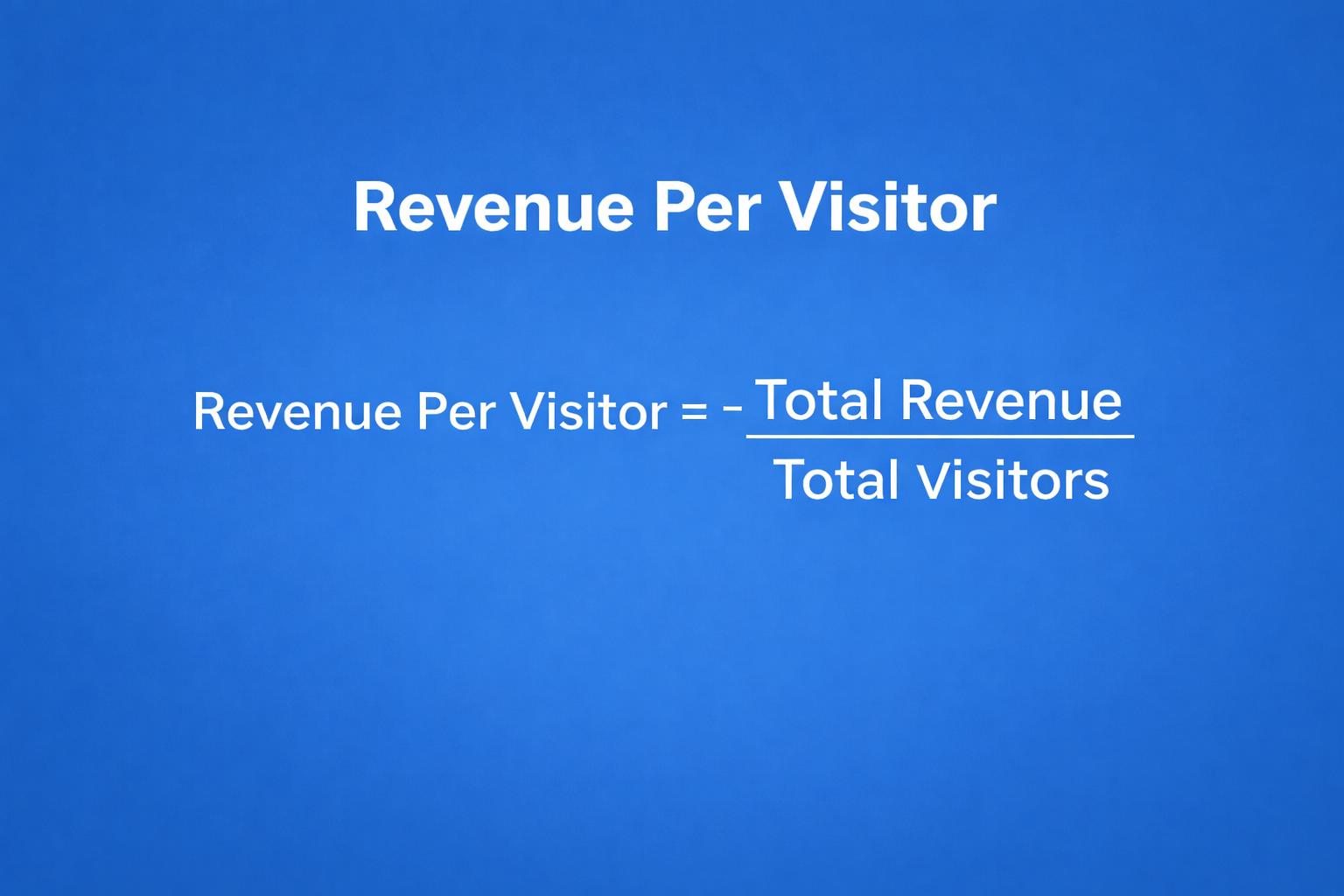
Revenue per Visitor is found by taking the total revenue earned and dividing it by the number of people who visited the site during that time period. The calculation must use the same visitor definition and timeframe to stay accurate.
Why Revenue per Visitor Matters in Ecommerce?
Revenue per Visitor helps show how well a store turns traffic into revenue. Instead of only counting orders, it looks at the value created by every visitor.
- Shows overall store efficiency by linking traffic directly to revenue
- Helps judge marketing quality by showing whether visitors are actually valuable
- Allows traffic sources to be compared using revenue, not just clicks
- Helps measure CRO changes by showing if page improvements increase revenue per visitor
- More useful than conversion rate alone because it includes how much people spend
How Is Revenue per Visitor Different From Conversion Rate and Average Order Value (AOV)?
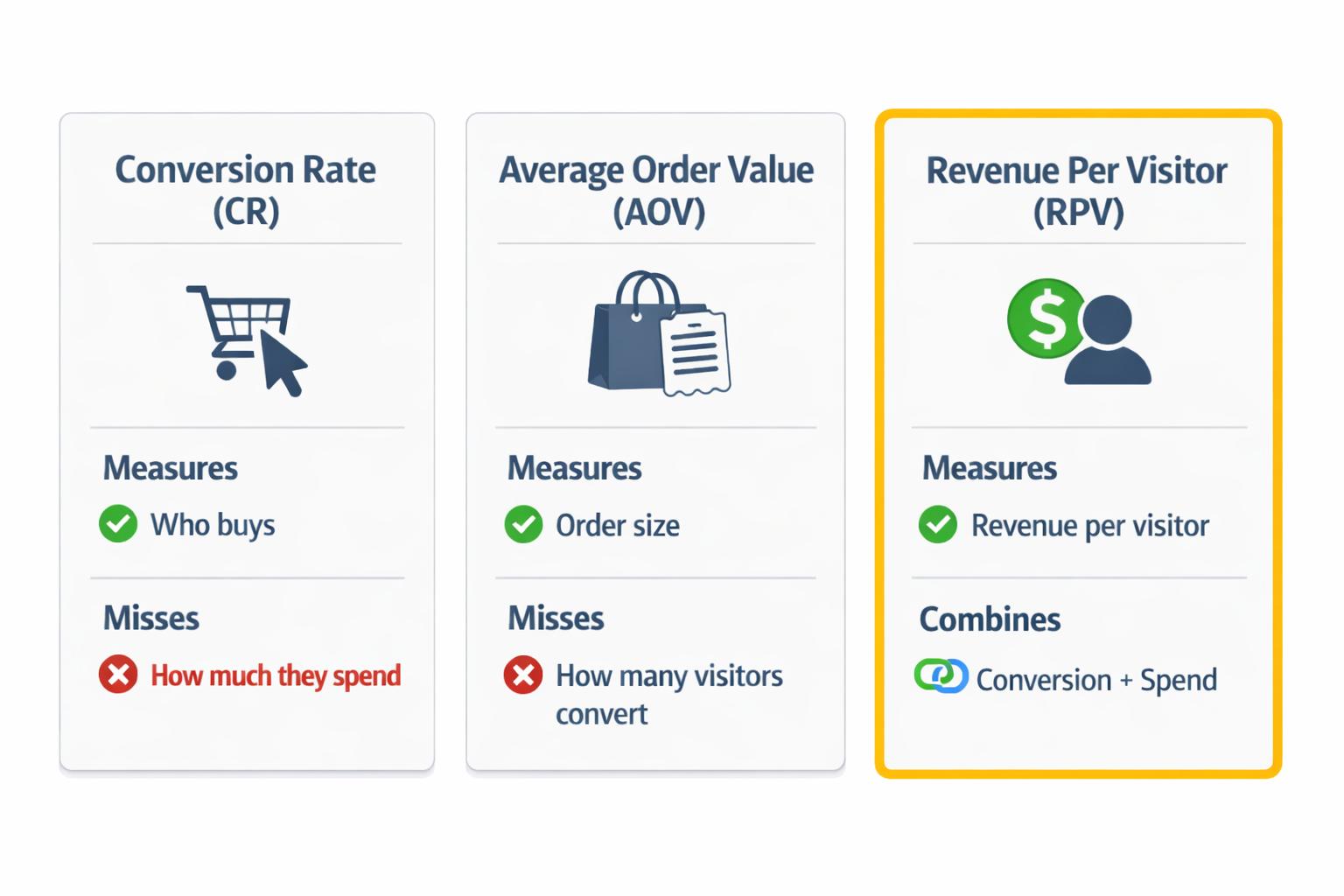
Revenue per Visitor (RPV), Conversion Rate, and Average Order Value (AOV) each measure a different part of ecommerce performance.
- RPV reflects overall revenue efficiency by combining traffic quality and order value
- Conversion Rate focuses only on purchase completion
- AOV focuses only on order size
RPV provides a more complete view than either metric alone.
What Causes a Low Revenue per Visitor?
Revenue per Visitor is low when people show up but don’t buy much — or don’t buy at all.
This is typically caused by:
- Weak conversion performance
- Limited cart growth
- Misaligned product presentation
- Ineffective upsell strategy
- Low-intent traffic
- Friction during mobile browsing or checkout
How to Improve Revenue per Visitor?
Revenue per Visitor improves when buying feels simple and valuable. Visitors convert more often and spend more when friction is reduced, which is the aim of Shopify conversion optimization. This usually means:
- Making product pages easier to understand and trust
- Lifting AOV with bundles, upsells, and volume discounts
- Streamlining checkout
- Segmenting traffic and adjusting offers by intent
- Aligning paid ads with the right post-click experience
When Revenue per Visitor Becomes the Right Metric to Watch?
Revenue per Visitor is useful when visitor counts or conversion rate no longer explain revenue changes. It helps show whether traffic is actually generating value, not just visits.
Tracking RPV is useful:
- When scaling paid ads and checking traffic quality
- When comparing channels or campaigns by revenue impact
- When making Conversion Rate Optimization (CRO) efforts
- When diagnosing cases where traffic rises but revenue does not