



 647-812-5125
 Back to Ecommerce Glossary
What Is Add to Cart Rate?
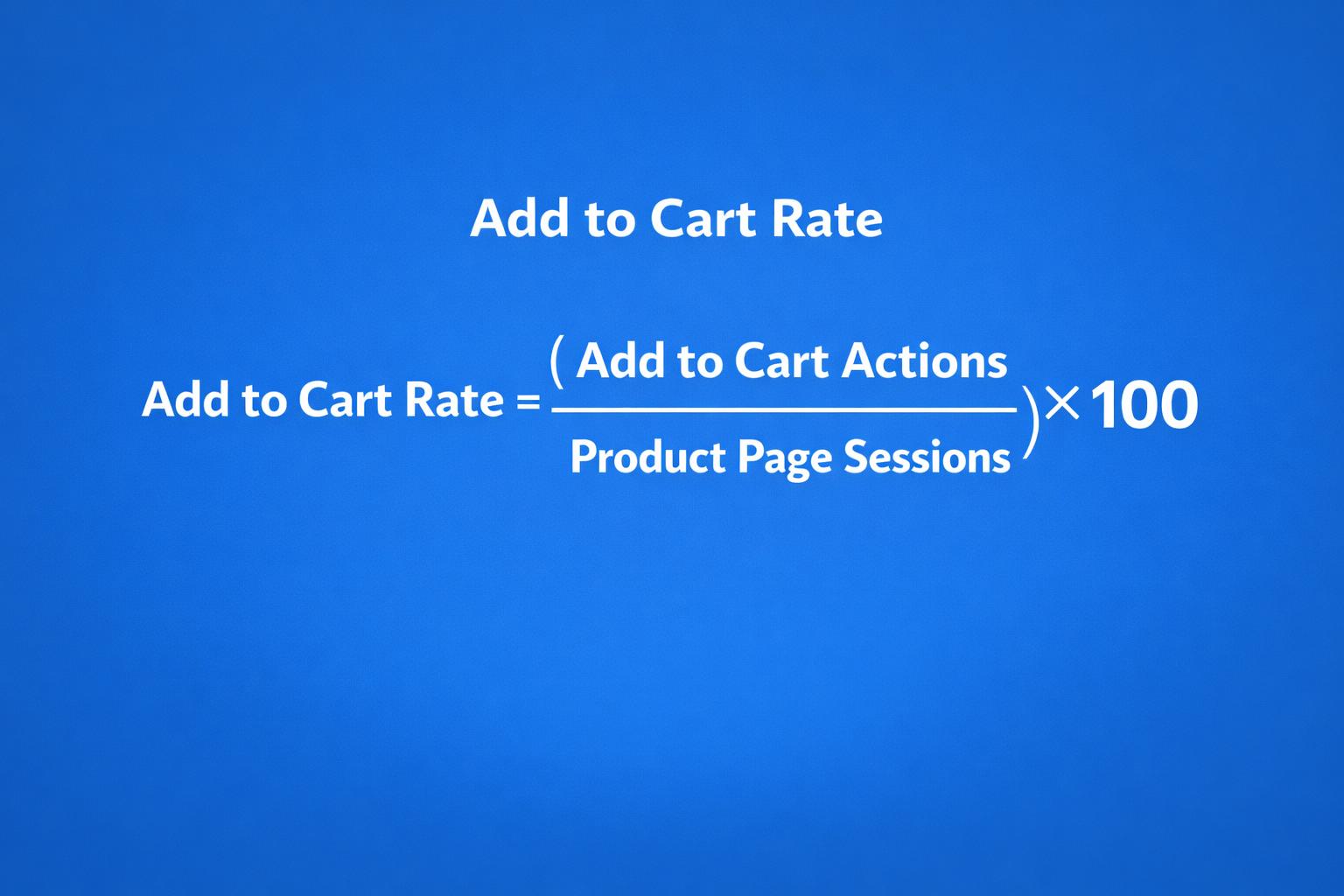
Add to cart rate shows percentage of the product page visitors who add an item to their cart. It shows whether shoppers are interested in a product, even if they don’t complete a purchase. Viewing a product shows interest. Adding it to the cart shows intent.
How Add to Cart Rate Is Calculated?
Add to cart rate is calculated using product page activity.
Why Does Add to Cart Rate Matter in Ecommerce?
Add to cart rate matters because it shows whether a product page is encouraging shoppers to move beyond browsing. It indicates:
- Product-level interest — shoppers don’t just view the product, they think about buying it
- Early warning signal — problems with price, trust, or the product page often appear here first
- Intent, not completion — it sits before checkout, not after payment
- Different from conversion rate — conversion rate shows finished sales, add to cart shows consideration
- Different from checkout rate — checkout starts later, once intent is already formed
A product can get plenty of views and clicks, but adding to cart is the point where interest becomes serious.
What Are the Average Add to Cart Rate Benchmarks?
Add to cart rate benchmarks vary by industry and product type and should always be read in context. They are best used to understand patterns in shopper behavior rather than define success.
- Most ecommerce stores fall within a broad middle range rather than at extremes
- Fashion and consumer goods often see higher add to cart rates than electronics or technical products
- Desktop users tend to add items more often than mobile users
- Paid traffic often behaves differently from organic traffic, especially in intent
- Benchmarks work best for tracking trends over time, not as fixed targets
Benchmarks are useful for comparison, but improvement over your own past performance matters more.
What Is the Difference Between Add to Cart Rate and Conversion Rate?
Add to Cart Rate and Conversion Rate track different moments in the buying journey. One shows interest. The other shows a completed sale.
Difference Between Add to Cart Rate and Conversion Rate |
||
|---|---|---|
|
Aspect |
Add to Cart Rate |
Conversion Rate |
|
What it measures |
Intent to buy i.e. if shoppers want the product |
Completed purchase |
|
User action |
Adding a product to the cart |
Paying and placing an order |
|
Where it sits |
Before checkout |
After checkout |
|
What it reflects |
Product interest and consideration |
Final buying decision |
What Are the Common Reasons for a Low Add to Cart Rate?
A low add to cart rate usually means shoppers are viewing products but not taking the next step. Common reasons include:
- Price feels high — the product doesn’t look worth the price at first glance
- Product details feel unclear — images or descriptions don’t answer basic questions
- Missing trust info — no reviews, shipping details, or return policy to feel safe
- Mobile experience is frustrating — buttons or options are hard to use on phones
- Slow page load — pages take too long to open and people leave
- Options are confusing — size, color, or availability isn’t easy to understand
Most of the time, interest is there. The page just doesn’t help shoppers move forward.
How Can You Improve Add to Cart Rate?
Add to cart rate can improve when product pages make it easier for shoppers to understand the product and feel confident taking the next step, a common focus of Shopify conversion optimization.
- Clear product information — details should be easy to read and quick to understand
- Visible add to cart button — the button should appear without scrolling
- Upfront pricing and shipping — costs should be clear before adding to cart
- Trust signals near the button — reviews, ratings, or guarantees close to the action
- Simple mobile layout — options and buttons must work smoothly on phones
- Fast pages and basic usability — slow load times and broken UX should be fixed first
Most improvements come from removing friction, not adding more elements.
What affects Add to Cart Rate Tracking?
Add to cart rate is tracked by counting how often shoppers add a product to their cart compared to how often the product page is viewed. Inaccurate or inconsistent tracking can affect how reliable the data is.
- Add to cart actions must be recorded when a shopper adds an item to the cart
- These actions are usually logged as events by analytics tools
- Tracking should be applied consistently across all product pages
- Missing or duplicate records can distort the results