



 647-812-5125
 Back to Ecommerce Glossary
What Is a Landing Page?
A landing page is a page created to get visitors to take one specific action. That action could be buying a product, signing up, or filling out a form.
How Is a Landing Page Different From a Homepage or Product Page?
Landing Page, homepage or product Page are built for different situations. The difference comes down to purpose and how much freedom a visitor is given.
Landing Page vs Homepage vs Product Page |
|||
|---|---|---|---|
|
Aspect |
Landing Page |
Homepage |
Product Page |
|
Main purpose |
Get the visitor to take one specific action |
Help visitors explore the website |
Help visitors decide on one product |
|
Number of goals |
One clear goal |
Many different goals |
One buying decision |
|
Navigation links |
Very limited or removed |
Many links and sections |
Some links, mostly product-related |
|
Content focus |
Short, focused, action-driven |
Broad overview of brand and offerings |
Detailed information about one product |
|
Typical actions |
Sign up, download, book, click through |
Browse, learn, navigate |
Add to cart, choose options |
|
Visitor mindset |
Came from an ad or campaign |
Arriving for the first time or returning |
Actively considering a purchase |
|
Distractions |
Kept to a minimum |
Expected and intentional |
Limited but present |
Why Landing Pages Matter in Ecommerce?
In ecommerce, many visitors arrive on a site because they clicked an ad, email, or promotion. A landing page matters because it shows only the information related to that click, helping visitors move forward with a clearer path to making a purchase.
Unlike a homepage, landing pages are designed around one clear action, which often leads to better engagement and conversions. Many ecommerce brands use them as part of broader campaigns tied to ads, email marketing, and promotions. Our Shopify marketing services help create and optimize landing pages built around traffic intent and conversions.
What a Landing Page Usually Includes?
Landing pages tend to be stripped down compared to other pages on a site. The focus is on guiding the visitor toward one specific step.
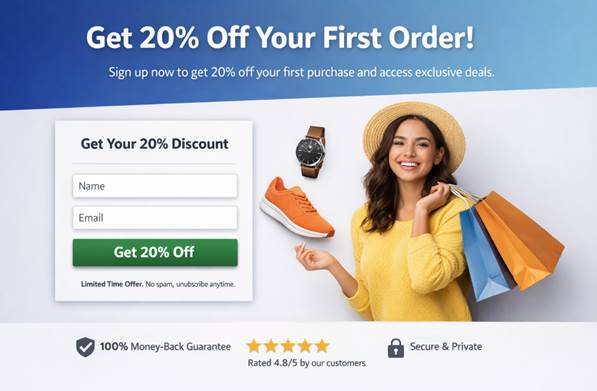
Common landing page elements are:
- One clear headline
- A short explanation underneath
- A single button or form
- Simple visuals that support the message
- Few, if any, navigation links
- Trust indicators
What Are the Benefits of a Well-Designed Landing Page for Shoppers and Stores?
A well-designed landing page benefits both sides of the experience — it’s one of the highest-leverage Shopify CRO strategies for turning campaign traffic into sales. Shoppers get clarity and direction, while stores get stronger results from focused traffic and campaigns.
Landing Page Benefits for Shoppers vs Stores |
||
|---|---|---|
|
Area |
Benefit for Shoppers |
Benefit for Stores |
|
Clarity |
Understand the offer quickly |
Fewer confused exits |
|
Focus |
One clear next step |
Higher completion rates |
|
Navigation |
Fewer distractions |
Better attention control |
|
Speed |
Faster decisions |
Shorter path to conversion |
|
Mobile use |
Easier interaction on phones |
Stronger mobile performance |
|
Messaging |
Clear expectations |
Better ad-to-page alignment |
What Are Common Landing Page Mistakes to Avoid?
Landing page problems usually happen when the page tries to do too much or lacks clarity.
- Multiple calls to action
- No Clear Headline explaining the offer
- Long or confusing copy
- Sending traffic to the wrong page
- Forms asking too much information
- Poor mobile experience
- Slow page loading
Where Landing Pages Fit in the Ecommerce Journey?
Landing pages usually sit at the entry point of the ecommerce journey. Shoppers often arrive on them after clicking an ad, email, social post, or promotion.
A simple way to view the flow is:
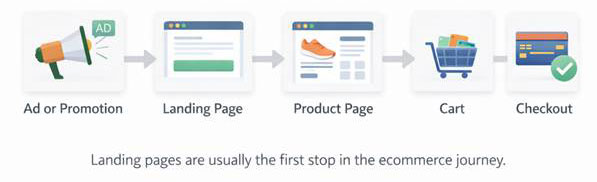
From the landing page, shoppers are guided to the next step before moving deeper into the store.
When Landing Pages Become a Priority?
Landing pages become a priority when traffic is no longer general and starts arriving with a clear reason or expectation.
This usually happens when:
- Traffic comes from paid ads, email campaigns, or promotions
- Different audiences are being sent to different offers
- Messaging needs to match a specific promise made before the click
- Product pages or homepages feel too broad for the intent
- Drop-offs increase after ads or campaign launches