



 647-812-5125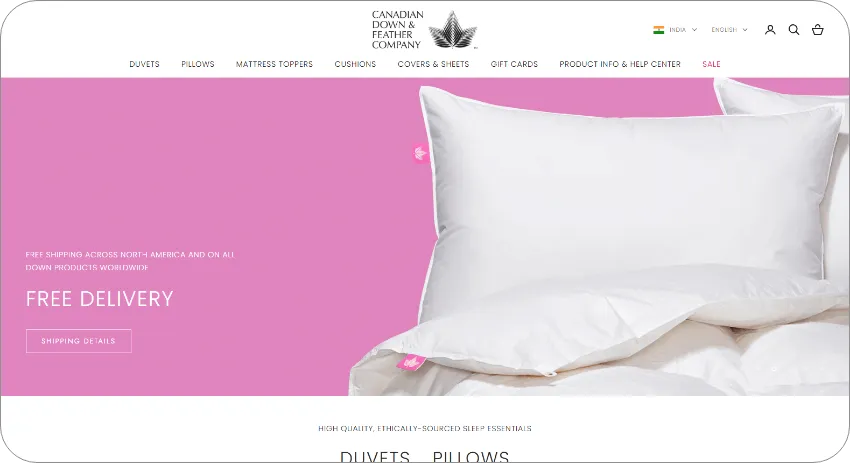

Shopify Marketing Backed by Results
For more than a decade, our team of Shopify marketing experts have focused only on Shopify — and for growing brands, that focus matters. As a dedicated Shopify marketing agency, our team handles the full marketing funnel: SEO, AI visibility (AEO), paid ads, social, email, SMS, and marketing automation.
Average return on ad spend (ROAS) after AI-optimized campaigns
Increase in email revenue with Klaviyo flows and automation
Boost in customer retention from remarketing and win-back campaigns
Revenue growth with Shopify SEO, ads, and email as one strategy
The Marketing Challenges eCommerce Brands Face
Most eCommerce brands don’t fail from lack of effort — they struggle because key marketing systems aren’t aligned to drive visibility, efficiency, and consistent revenue growth. That’s where a specialized Shopify marketing agency makes the difference.

Not showing up in search or recommended by AI systems
You’ve launched the store and may even be running ads, but when people search—or ask AI systems for recommendations—your brand or products don’t show up. Competitors take the top spots in search results and get mentioned in AI answers, while your store stays invisible. Without strong Shopify SEO, clear content structure, and signals that AI systems can understand, potential customers never make it to your site. A true ecommerce marketing agency should understand how search and AI visibility work together.

Ad spend going up, ROI going down
You put money into Google, Meta, maybe TikTok. The budget burns fast, results shrink, and every click feels more expensive than the last.
Without proper audience segmentation, funnel mapping, and testing, paid ads become unpredictable. A performance-focused Shopify marketing agency prevents wasted spend before it happens.

Emails & SMS that don’t convert
Campaigns go out. Lists grow. Revenue stalls.
Email and SMS aren’t just broadcast tools — they’re conversion channels. A data-driven ecommerce marketing agency builds lifecycle flows that convert across welcome, abandoned cart, post-purchase, and win-back.

Marketing tools that don’t talk to each other
Ads, email, analytics — all in silos. Nothing connects, so you’re making decisions half-blind and repeating the same work across platforms. This is where structured Shopify marketing services make the difference.

Traffic without conversions
You did the work to bring people in. Ads, influencers, organic — the traffic is there. But sales don’t follow, because visitors browse and leave without buying.
An experienced Shopify marketing agency helps you look beyond acquisition and optimize the entire buying journey — from landing page to checkout.

Missing out on AI-Powered insights
You’re guessing what works. Without predictive data, you can’t see what’s working until it’s too late. Budgets get wasted, and growth feels stuck.
Modern ecommerce marketing agencies use AI to reduce guesswork and increase marketing precision.
Our AI-First Shopify Marketing Approach
Strategy First, Tools Second

Most Shopify brands jump from one app or ad channel to the next. We start with the strategy — who you’re targeting, how they buy, and what’s broken in the funnel. Then we use the right tools to fix it.
Use AI Where It Matters

We don’t add AI for the sake of it. We use it where it saves money or drives sales: smarter ad targeting, predictive email flows, upsell logic, and testing that shows us what actually converts.
One Shopify Focused Team

We’ve been building and marketing on Shopify for more than a decade. Unlike a broad ecommerce marketing agencies, our team works only on Shopify and manages SEO, AEO, paid ads, social, email & SMS, and CRO under one roof — so you’re not juggling five different teams.
Built for Canada, Ready for the US

As a Canadian Shopify marketing agency, we know the market because it’s home. But we also help brands expand south of the border, making sure your Shopify marketing scales beyond one region.
Shopify Marketing Services That Solve Real Problems
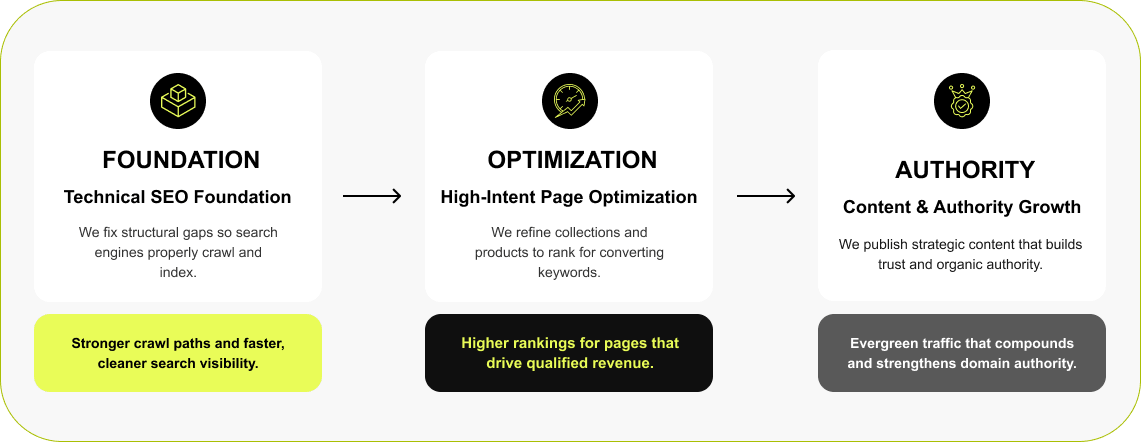

Shopify SEO & Content Marketing
We’ve worked with too many Shopify stores that looked great but sat invisible on Google. The issue is almost always the same: no SEO strategy, weak content, and technical gaps. We fix that with Shopify-specific SEO — site speed, schema, optimized collections, and content that actually ranks. The result is steady organic traffic instead of waiting on paid ads to do all the work.
Read More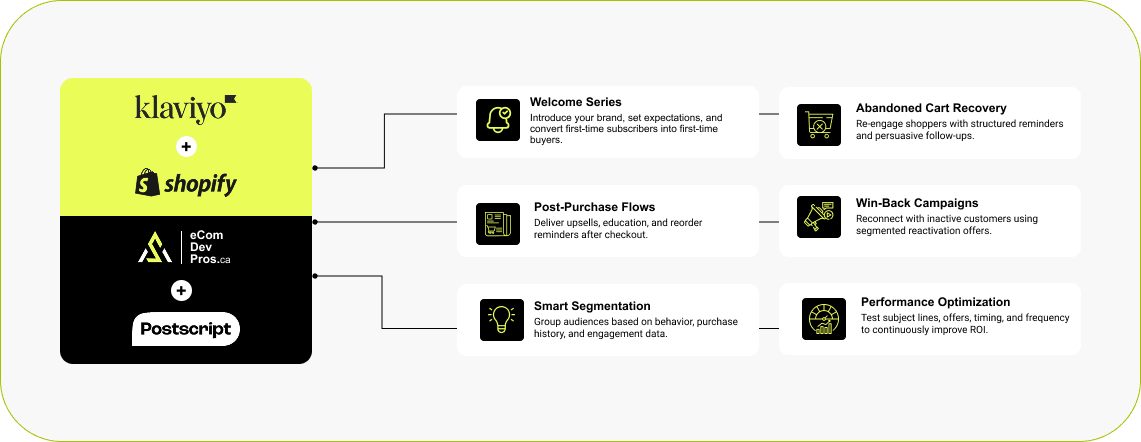

Shopify Email & SMS Marketing
Most brands treat email and SMS as an afterthought — blasting the same generic promotions. We’ve seen how that kills engagement. Our approach uses email automation (e.g. Klaviyo flows) tailored to each step: welcome, abandoned cart, post-purchase, and win-back. Add AI-driven segmentation and SMS timing, and suddenly these channels go from ignored to driving 30–40% of revenue.
Read More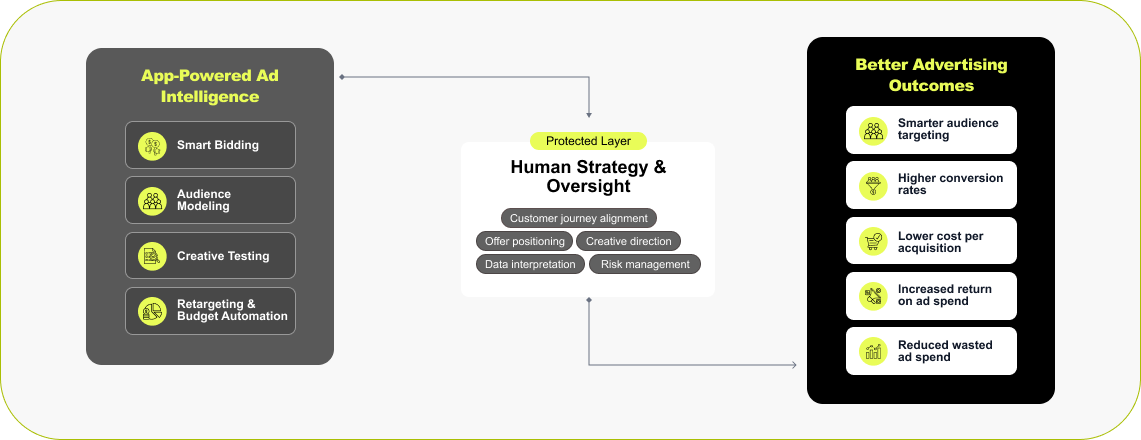
Google + Meta Ads
Ad spend is where most brands bleed cash. We’ve taken on stores burning thousands every month on Google and Meta with little to show. The fix is clear: targeting and AI-backed optimization — smarter bidding, better audiences, and retargeting that brings people back until they buy. When the right strategies are in place, ads stop being a gamble and start being a predictable growth.
Read More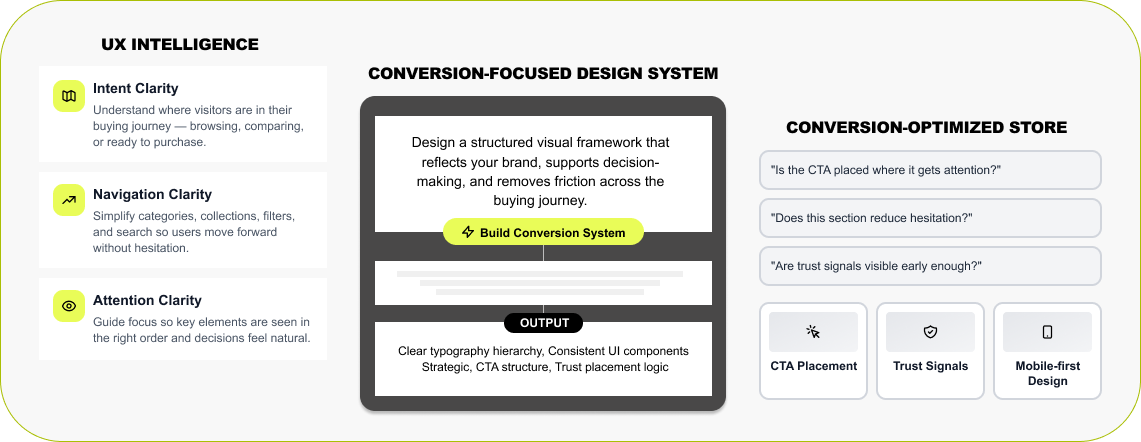

CRO & Analytics
We’ve worked on plenty of Shopify sites where traffic wasn’t the problem — the store itself was. Checkout would stall, pages loaded too slow, or the product copy didn’t build trust. We dig into the data, watch how people move through the store, and test changes until more visitors turn into paying customers.
Read More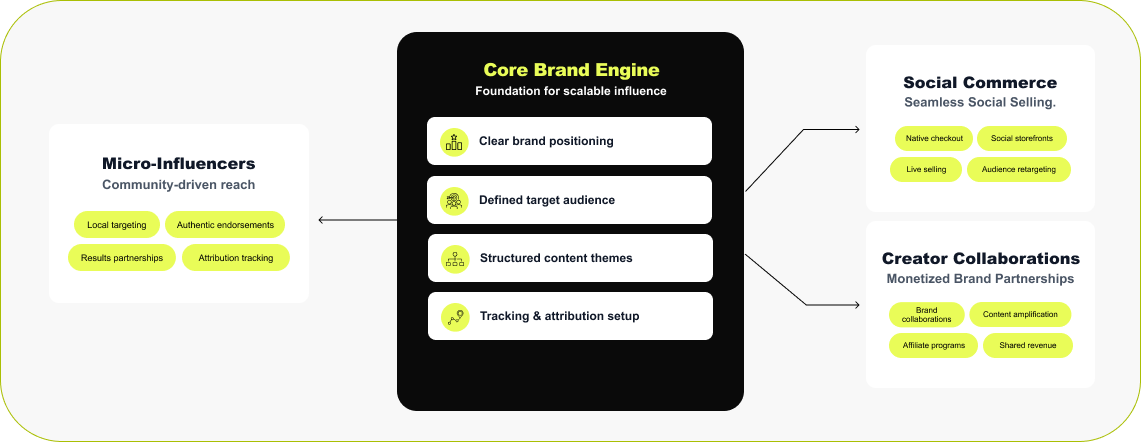

Influencer & Social Commerce
Most brands lean too hard on ads and write off influencers as hype. We’ve seen the opposite — when you work with the right micro-influencers, the results feel real. They already have your customers’ trust, and when we track sales instead of likes, that trust turns into revenue.
Read More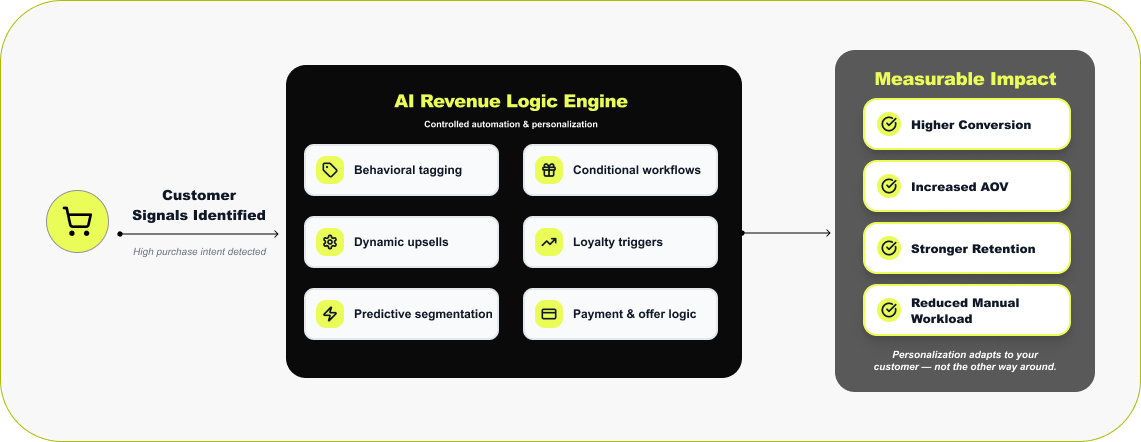

Personalization & AI Tools
We see too many teams wasting hours on tasks Shopify can handle automatically. Things like order tagging, upsells, loyalty rewards, and win-back campaigns don’t need to be done manually. We set up the workflows with tools like Rebuy, Yotpo, and Shopify Flow so your team saves time — and your store makes more money in the process.
Read MoreShopify Stores We’ve Helped Grow



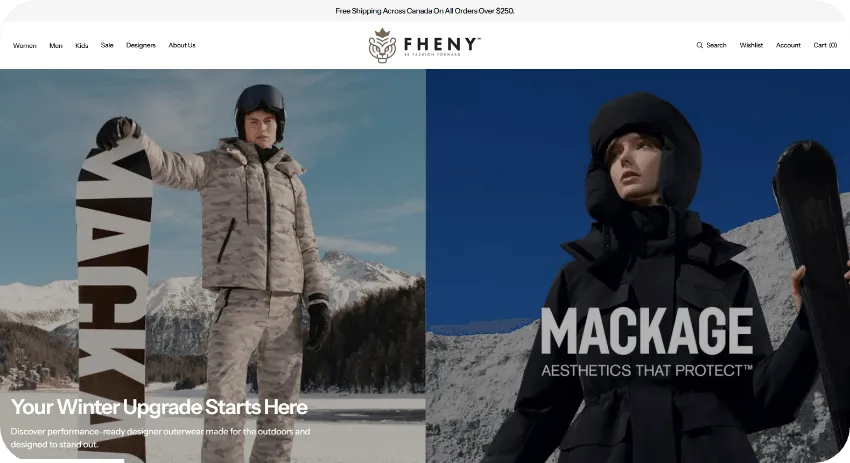
Luxury Fashion
Managed SEO and social media marketing for FHENY, improving organic visibility and audience engagement.



Luxury Bedding Manufacturing
We supported this Shopify Plus brand with focused social media marketing, aligning campaigns with seasonal demand and high-intent audiences to drive efficient, scalable growth.



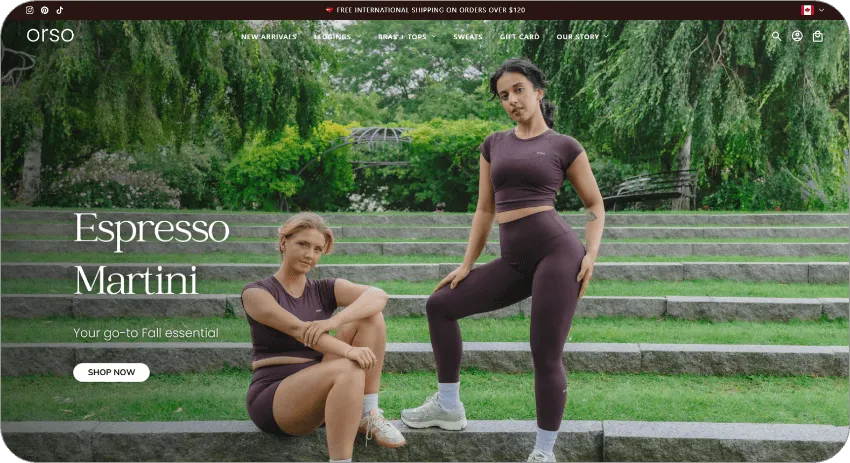
Women’s Activewear
Implemented SEO and digital marketing strategies for Orso to improve product discoverability and strengthen online brand engagement.
Get a Smarter Shopify Marketing Plan
Trusted by Modern Marketing & Growth Teams

Strong Shopify Expertise
“Great team. Strong Shopify expertise. They improved our design and made the whole shopping experience better. It shows in our results.”

Subscription Store Design & Launch
“They didn't just build a store — they helped us think through how to present the brand and products properly. The design feels clean and engaging, not like a typical template store. What stood out was how they used customer reviews and stories across the site. It's been around 3 months since launch and we're seeing solid progress. Conversion rate has improved to around 2.7%, subscription sign-ups are coming in steady (close to 20% on some products), and we're already seeing repeat orders. Their team was equally vested in the project with us and suggested ideas outside their current project scope. We liked their approach so much that we signed them on for marketing and CRO as well.”

Conversion Optimization That Increased Our Sales
“Our conversion rate has improved steadily, and the best part is we're generating more revenue from the same marketing spend. I actually found them through their CRO calculator, and it helped me truly realize how much revenue we were leaving on the table. We've now retained them for ongoing conversion optimization and other services they offer.”
Brands Who Build, Grow, and Win With Us
Shopify Marketing FAQ
Every Shopify project starts with a few of the same questions: what will it cost, how long will it take, and what happens to my store when changes are made? These are fair concerns, and we hear them from nearly every client we work with.
What is the right mix of Shopify marketing services to promote my store?
+The right mix depends on your goals and budget, but there are a few must-haves. SEO paired with content marketing is the long-term play — it builds visibility and helps your store show up not just in Google, but also in AI-driven search. At the same time, start with a small ad budget on Google and Meta, then scale once you see what works. Always include retargeting through Google Display and Meta to bring shoppers back until they’re ready to buy. If the budget allows, influencer campaigns can also add awareness and trust on social.
What are the recommended Shopify marketing services for a newly launched store?
+When you’re just starting out, keep it simple. Get SEO and content going early so you can start building visibility — it takes time to kick in. Run a small ad budget on Google and Meta to test audiences and see where sales come from. Always set up retargeting, because most people won’t buy the first time they visit. If you’ve got extra budget, micro-influencers can help get the word out and build trust fast.
How much should I budget for Shopify marketing each month?
+A good starting point is around 10% of the revenue you want to hit. So if your goal is $30k a month, set aside about $3k for marketing. In the early days, more of that will go to ads. As you grow, you’ll shift budget into SEO, retention, and automation so you’re not relying only on paid traffic.
How do I know which Shopify marketing channel will give me the best ROI?
+The right Shopify marketing channel depends on your industry and margins. For most stores, email and SMS usually drive the highest return once you have a customer base. Ads can scale fast but need careful testing to stay profitable, and SEO takes longer but pays off with steady traffic. The “best” channel isn’t the same for everyone — a fashion brand’s mix will look very different from a B2B supplier.
Is SEO still relevant for eCommerce websites in the age of AI?
+Yes — SEO still matters and is very much relevant. AI is changing how people search. However, most users still start on Google. A store that’s optimized for search shows up in both traditional results and new AI-driven results. If you ignore SEO, you’re handing traffic to competitors who are doing the work.
How long does it take for Shopify SEO to show results?
+Shopify SEO takes time. The timeline for every project is different and depends on your industry, target market (local vs. national vs. international), and goals. The foundation has to be strong technical SEO, then content and links layered on top. Stay patient — results build over months, not weeks. If you need quicker wins, pair SEO with other Shopify marketing strategies like ads or email while the SEO gains traction.
What’s a realistic ROAS goal for Shopify ads in Canada?
+It depends on your industry, margins, and even the season. A fashion store might see lower ROAS during peak ad competition (like holidays), while a niche brand with higher margins can hit stronger returns year-round. In general, most Shopify brands aim for 3–4x on Meta and 4–6x on Google once campaigns are dialed in. The key is to track profit, not just ROAS — because a “good” ROAS that doesn’t leave you with margin isn’t good at all.
Do influencer campaigns actually work for Shopify stores?
+Yes — when they’re done right. Instead of paying big money to a celebrity influencer, focus on micro-influencers with smaller but loyal followings. They usually convert better because their audience trusts them. The best use is product seeding, unboxing videos, and social proof content that can also be reused in your ads. You can connect with micro-influencers through various marketplaces. Popular ones are TikTok Creator Marketplace, Instagram, Shopify’s own Collabs platform, or influencer marketing tools. The key is to track sales impact, not just likes or comments.
What percentage of sales should come from email and SMS marketing?
+For a healthy Shopify store, email and SMS together should drive about 25–40% of total revenue — that’s the benchmark Shopify and Klaviyo both report. Newer stores won’t hit those numbers right away since list size matters, but the goal is to build toward it with welcome flows, abandoned cart, and post-purchase campaigns. Email is usually the main driver. And SMS boosts time-sensitive offers and reminders. Use two platforms strategically, with AI-powered segmentation and automation, and your store can push even higher.
Can AI really improve Shopify marketing results?
+Yes — but only if it’s used in the right places. We use AI to cut wasted ad spend by targeting the right audiences, to personalize email and SMS so messages don’t feel generic, and to predict which customers are most likely to buy again. It can also help with SEO - right from keyword research to content clustering, and with store personalization like upsells or loyalty programs. AI doesn’t replace strategy — it makes the strategy work harder.
Our Shopify Marketing Tech Stack & App Partners
The right tools make Shopify marketing smarter, faster, and more profitable. As an experienced Shopify marketing agency, we partner with leading marketing apps and platforms so you don’t have to guess what works.